Mostrando entradas con la etiqueta literature. Mostrar todas las entradas

sábado, 4 de febrero de 2017

Beowulf


Beowulf is an Old English Epic poem written between the 8th and the 11th century in Anglo-Saxon times. 
 
It is the story of Beowulf, a Scandinavian hero.
Beowulf comes to the aid of King Hrothgar, whose great hall is plagued by the monster Grendel.


✐ But before we get started, what is an epic poem? Write down some characteristics of epic poems?


Beowulf was originally written in Old English , which would be very difficult to understand.

✐ What do we mean by Old English or Anglo Saxon? 

You can listen to a fragment here.


But don't worry, you can read a short adapted  version here: Beowulf


To learn more about the poem, the Angle-Saxons and the history of English, watch the video


...and have a look at this presentation:


The Anglo-Saxons and Beowulf from k8would


Beowulf has been adapted into film several times. There is even a game!

Watch an animated version here.


jueves, 5 de mayo de 2016

NUMBER THE STARS

Your Next Read...

Number the Stars , by American writer Lois Lowry, tells the story of ten-year-old Annemaries Johansen and her best friend Ellen Rosen. The events take place in 1943, during the German occupation of Denmark.

In 1943 Hitler planned to arrest and deport Danish Jews. With the help of the Danish Resistance movement and many ordinary Danish people, 7, 220 of Denmark's 7,800 Jews were evacuated to Sweden.


...want to learn more?
The Danish Resistance
The Escape of Jews from Nazi occupied Denmark


The novel was awarded the Newbery Medal in 1990 as the "most distinguished contribution to American literature for children"


When you have finished reading, you can do the quiz
And if you enjoyed doing that one, here are some more quizzes
and still one more 


sábado, 14 de noviembre de 2015

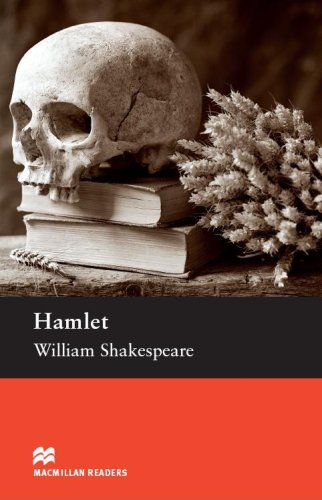
HAMLET


The Tragedy of Hamlet, Prince of Denmark

    http://issuu.com/macmillaneducation/docs/macmillan_readers_-_hamlet?e=1203993/6919032
  • Publisher: Macmillan Publishers Ltd
  • Level: Intermediate 
“Something is rotten in the state of Denmark.” 

as you are about to find out...


Hamlet, one of William Shakespeare's  most famous tragedies, and one of the greatest world revenge stories, was written some time between 1599 and 1602. It tells the story of Hamlet, whose father's ghost urges him to avenge his murder. Interested? Start reading.
Act one


And so, a few weeks later, we have come to the end...
Alas, poor Hamlet!
So something was rotten in Denmark ...

And now that we have finished reading Hamlet, here are some quizzes to test your understanding of the play:  
Hamlet: quiz1
Hamlet: quiz 2

And for those of you with a poor memory, here is a brief summary of the play


Assignments:

  • Scenes from Hamlet: 19th Feb
  • Test: 26th Feb

martes, 13 de octubre de 2015

Beowulf


Beowulf is an Old English Epic poem written between the 8th and the 11th century in Anglo-Saxon times. 
 
It is the story of Beowulf, a Scandinavian hero.
Beowulf comes to the aid of King Hrothgar, whose great hall is plagued by the monster Grendel.


Traditionally, an epic poem is a long, serious, poetic narrative about a significant event, often featuring a hero. Before the development of writing, epic poems were memorized and played an important part in maintaining a record of the great deeds and history of a culture. Later, they were written down and the tradition for this kind of poem continued. Epics often feature the following: a hero who embodies the values of a culture or ethnic group; something vital that depends on the success of the hero's actions; a broad setting, sometimes encompassing the entire world; intervention by supernatural beings.  Can you think of any other examples?


Beowulf was originally written in Old English, which would be very difficult to understand.
You can listen to a fragment here.


But don't worry, you can read a short adapted  version here: Beowulf


To learn more about the poem, the Angle-Saxons and the history of English, watch the video


...and have a look at this presentation:


The Anglo-Saxons and Beowulf from k8would


Beowulf has been adapted into film several times. There is even a game!

Watch an animated version here.


jueves, 26 de febrero de 2015

Two stories by Oscar Wilde


The Happy Prince and The  Selfish Giant are two well-known stories by Irish writer Oscar Wilde. They are part of a collection of stories for children, The Happy Prince and Other Tales, published in 1888.


You can find both tales on BIBLIOMANIA 


Listen to The Happy Prince being read here.


The  Selfish Giant

jueves, 8 de enero de 2015

Shakespeare's Globe Theatre

A tour around Shakespeare's Globe Theatre in London


  1. Is The Globe Shakespeare's original theatre?
  2. Where does it get its name from?
  3. Why weren't plays performed at night?
  4. What were the groundlings?
  5. Were there many women actors?
  6. What did the church call the theatre?
  7. Why is underwear mentioned?
  8. Which were the most expensive seats?
  9. What three elements are represented?
  10. What took eight years? Why?


domingo, 23 de noviembre de 2014

THE HERO by Siegfried Sassoon.

2014 marked the 100th anniversary of the First World War. 

The First World War affected the lives of millions of people. You can read about it here

 For those interested in history. here are a couple of  interesting links:

HISTORY- WW1

BBC WW1


Siegfried Sassoon was an English poet, writer, and soldier. Decorated for bravery on the Western Front, he became one of the leading poets of the First World War. He wrote about the horror and brutality of the war. Here is one of his poems.

THE HERO


'Jack fell as he'd have wished,' the Mother said,
And folded up the letter that she'd read.
'The Colonel writes so nicely.' Something broke
In the tired voice that quavered to a choke.
She half looked up. 'We mothers are so proud
Of our dead soldiers.' Then her face was bowed.

Quietly the Brother Officer went out.
He'd told the poor old dear some gallant lies
That she would nourish all her days, no doubt.
For while he coughed and mumbled, her weak eyes
Had shone with gentle triumph, brimmed with joy,
Because he'd been so brave, her glorious boy.

He thought how 'Jack', cold-footed, useless swine,
Had panicked down the trench that night the mine
Went up at Wicked Corner; how he'd tried
To get sent home, and how, at last, he died,
Blown to small bits. And no one seemed to care
Except that lonely woman with white hair.


Click here to listen to the poem being read.

PLEASE,  LEAVE YOUR COMMENTS BELOW (where it says no hay comentarios)


COMMENTS ARE NOT ABOUT THE READING, THEY ARE ABOUT THE THE POEM!!!

lunes, 10 de noviembre de 2014

WHAT SHALL WE READ NEXT?


What book would you like to read next? Adventure? Romance? Mystery? A classic?
Have a look through this catalogue and choose three books you think you would enjoy. Go to pages 43  to 54 (Levels B.1.2 or B.2.1) PLEASE REMEMBER YOU HAVE TO CHOOSE BOOKS FROM THE CATALOGUE!!!


http://www.vicensvives.com/vvweb/IMAFICH/catalegs/100812.pdf


Have you found  anything you'd like to read? Share your suggestions here:


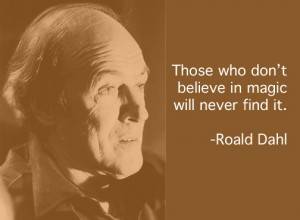
ROALD DAHL


Roald Dahl,  British novelist, short story writer, poet, fighter pilot, and screenwriter. 
http://gv.pl/pdf/the_umbrella_man.pdf He is the author of Matilda, Charlie and the Chocolate Factory,The Magic Finger, and so many unforgettable stories which we have all read and enjoyed. 


This week we are going to read one of his short stories, The Umbrella Man. 


1. Click on the image to read the story online or click here to print it.


domingo, 26 de octubre de 2014

BOOK SURVEY

Please take a moment to answer this survey.


RUDYARD KIPLING


Joseph Rudyard Kipling (1865 – 1936) was an English short-story writer, poet, and novelist. He wrote tales and poems of British soldiers in India and stories for children. He was born in Bombay, India, and was taken by his family to England when he was five years old.


Kipling's works of fiction include The Jungle Book (1894), which I am sure you have heard of, Kim (1901), and many short stories, including "The Man Who Would Be King"and Just So Stories, which we will be reading this month.


http://www.gutenberg.org/files/2781/2781-h/2781-h.htm

Just So Stories is a collection of stories written for children about animals and how they have acquired certain characteristics, with titles like  "How the Leopard Got his Spots" or "How the Camel Got is Hump"

Click on the book to read Just So Stories


Now lets talk about one of the stories, The Elephant's Child? 
 Can you answer these questions?

 
1.     What does ‘satiable curtiosity mean?
2.     Where does the Elephant's Child live?
3.     Name some of his relatives. Are they nice to him? Why?
4.     What did the Elephant do all the time on his way to see the Crocodile?
5.     What did the Crocodile say to the Elephant's Child?
6.     What happens then?
7.     What does Elephant’s new nose enable him to do that he couldn’t do before?
8.     What do you think the story is really about?


sábado, 18 de octubre de 2014

ALICE IN WONDERLAND


You have been reading Alice in Wonderland for your Spanish class. Why not read one or two chapters in English now?


Read the chapter on line:  A MAD TEA PARTY

Download chapter here


“If I had a world of my own, everything would be nonsense. Nothing would be what it is, because everything would be what it isn't. And contrary wise, what is, it wouldn't be. And what it wouldn't be, it would. You see?” 

What is your favourite quote from Alice in Wonderland?


How many characters from Alice in Wonderland could you name? Who is your favourite?
Read a list of characters here.