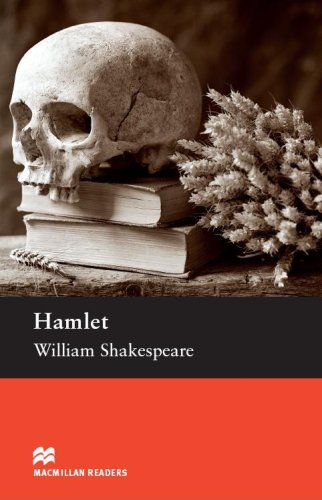
Hamlet, one of William Shakespeare's most famous tragedies, and one of the greatest world revenge stories, was written some time between 1599 and 1602. It tells the story of Hamlet, whose father's ghost urges him to avenge his murder. Interested? Start reading. Act one
And so, a few weeks later, we have come to the end...
Alas, poor Hamlet! So something was rotten in Denmark ...
And now that we have finished reading Hamlet, here are some quizzes to test your understanding of the play: Hamlet: quiz1 Hamlet: quiz 2
And for those of you with a poor memory, here is a brief summary of the play
Marco Polo was a Venetian merchant who travelled to Asia in the 13th century.His travels are recorded in The Book of the Marvels of the World.
Here is a map of his route along the Silk Road.
Find out about his life and travels in the following videos.
Now,for a more musical version of Marco Polo's life...
And you can also visit the following websites: Marco Polo and his travels.
ASSIGNMENT
Once you have chosen one, write a report on their journey.
Your report should include:
the route, countries visited, places discovered, etc.
their achievements
the reasons for your choice
maps and photographs
anything else you consider relevant or interesting
sources
Use your own words as much as possible. DO NOT COPY & PASTE!! Deadline: 7th November ( written report)
Once your report has been checked by me and returned to you, you will create a poster for the class , which should include photos, maps, etc.
Beowulf is an Old English Epic poem written between the 8th and the 11th century in Anglo-Saxon times. It is the story of Beowulf, a Scandinavian hero. Beowulf comes to the aid of King Hrothgar, whose great hall is plagued by the monster Grendel.
Traditionally, an epic poem is a long,
serious, poetic narrative about a significant event, often featuring a hero.
Before the development of writing, epic poems were memorized and played an
important part in maintaining a record of the great deeds and history of a
culture. Later, they were written down and the tradition for this kind of poem
continued. Epics often feature the following: a hero who embodies the values of
a culture or ethnic group; something vital that depends on the success of the
hero's actions; a broad setting, sometimes encompassing the entire world;
intervention by supernatural beings. Can you think of any other examples?
Beowulf was originally written in Old English, which would be very difficult to understand. You can listen to a fragment here.
But don't worry, you can read a short adapted version here: Beowulf
To learn more about the poem, the Angle-Saxons and the history of English, watch the video
his along well able appalling was from as within from
including before birth touring against no
Charles Dickens is much loved for his
great contribution to classic English literature. He was the quintessential
Victorian author. His epic stories, vivid characters and exhaustive depiction
of contemporary life are unforgettable.
His own story is one of rags to riches. He
was born in Portsmouth on 7 February 1812, to John and Elizabeth Dickens. The
good fortune of being sent to school at the age of nine was short-lived because
his father, inspiration for the character of Mr Micawber in 'David
Copperfield', 1_____________ imprisoned for bad debt. The entire family, apart
2_____________ Charles, were sent to Marshalsea 3_____________ with their
patriarch. Charles was sent to work in Warren's blacking factory and endured 5_____________
conditions as 6_____________as loneliness and
despair. After three years he was returned to school, but the experience was
never forgotten and became fictionalised in two of his better-known novels
'David Copperfield' and 'Great Expectations'.
Like many others, he began his literary
career7_____________a
journalist. His own father became a reporter and Charles began with the
journals 'The Mirror of Parliament' and 'The True Sun'. Then in 1833 he became
parliamentary journalist for The Morning Chronicle. With new contacts in the
press he was 7____________ to publish a series of sketches under the pseudonym
'Boz'. In April 1836, he married Catherine Hogarth, daughter of George Hogarth
who edited 'Sketches by Boz'. 8_____________
the same month came the publication of the highly successful 'Pickwick Papers',
and 9_____________ that point on there was 10_____________ looking back for
Dickens.
As well as a huge list of novels he published
autobiography, edited weekly periodicals 11_____________ 'Household Words' and
'All Year Round', wrote travel books and administered charitable organisations.
He was also a theatre enthusiast, wrote plays and performed 12_____________
Queen Victoria in 1851. His energy was inexhaustible and he spent much time
abroad - for example lecturing 13_____________ slavery in the United States and
14_____________ Italy with companions Augustus Egg and Wilkie Collins, a
contemporary writer who inspired Dickens' final unfinished novel 'The Mystery
of Edwin Drood'.
He was estranged from 15_____________ wife in
1858 after the 16_____________ of their ten children, but maintained relations
with his mistress, the actress Ellen Ternan. He died of a stroke in 1870. He is
buried at Westminster Abbey.
Since the Syrian civil war broke up four years ago, more than 11 million people have been displaced.
The
majority of refugees are now in Lebanon, Turkey and Jordan, but
hundreds of thousands are attempting a dangerous trip across the
Mediterranean into Greece, hoping to find a better future in Europe. How is Europe responding?
This is Amira, a 16-year old Syrian refugee. She is one of 30 million other children around the world who had to leave their home behind.